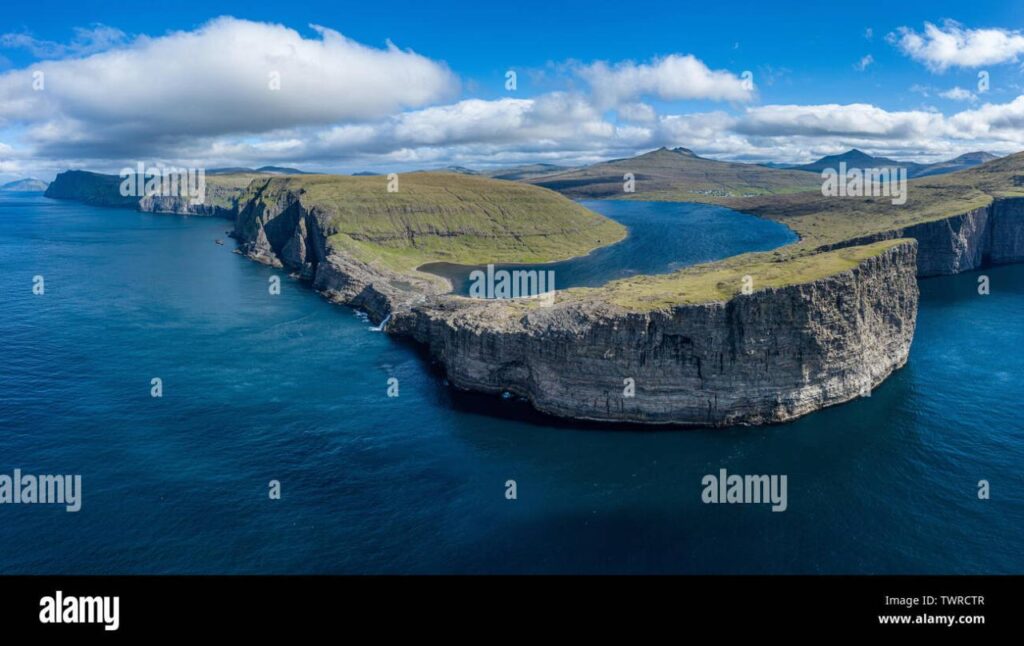

Lake sorvagsvatn – Lake Sørvágsvatn, a jewel nestled in the heart of the Faroe Islands, beckons with a mystery that captures the imagination. It’s not just a lake; it’s a visual enigma, a place where nature plays tricks on the eye and leaves you breathless. From the moment you cast your gaze upon its seemingly elevated waters, you’re drawn into a world of perspective, geology, and the sheer wonder of the natural world.
Prepare to be amazed as we delve into the secrets of this remarkable place, uncovering its geographical wonders, the optical illusions it creates, and the emotional impact it has on those who visit. It’s a journey into the heart of a landscape that inspires awe, and leaves you wanting more.
The lake’s geographical location is a masterstroke of natural design, the ocean, the cliffs, and the very terrain contribute to a visual experience that is truly one-of-a-kind. You’ll discover how the unique vantage points and the interplay of light and shadow create an illusion that defies logic. The very essence of the place, the emotional responses it evokes, and the practical considerations for experiencing it firsthand will leave you with a sense of appreciation.
We will explore the ecological balance that supports life within and around the lake, understanding its beauty and its significance. And, finally, we’ll consider the impact of this natural wonder on the local community, the preservation efforts in place, and the lasting legacy of Lake Sørvágsvatn.
How does the geographical location of Lake Sørvágsvatn contribute to its unique visual phenomenon?

Source: explore.com
Lake Sørvágsvatn, a truly breathtaking sight, offers a sense of freedom. Just imagine experiencing that openness and connection, something akin to exploring a family naturist free lifestyle, embracing the natural beauty around you. The stark beauty of the lake, coupled with such a mindset, is a powerful invitation to a different way of being; a liberating experience to cherish forever in Lake Sørvágsvatn.
The visual allure of Lake Sørvágsvatn, also known as Leitisvatn, stems not just from its beauty but from a remarkable geographical interplay. This interaction of land, water, and perspective creates an illusion that has captivated travelers and photographers alike. The lake’s unique position, perched above the ocean, is a crucial factor in this optical trick. Let’s delve into the specifics of how this location contributes to its mesmerizing appearance.
Significance of the Lake’s Position Relative to the Ocean and Surrounding Cliffs
The location of Lake Sørvágsvatn is pivotal to its visual distinctiveness. It’s not merely a lake; it’s a carefully orchestrated scene where the ocean, cliffs, and the lake itself perform a captivating ballet of perspective. The lake’s elevated position, coupled with the surrounding terrain, gives rise to the illusion that it sits far above the sea.The most significant aspect is the lake’s placement on a plateau, which allows the ocean to be visible below.
This vertical separation is the primary catalyst for the visual deception. The cliffs bordering the lake on the ocean side, particularly those at Trælanípan, provide a crucial framing element. These towering cliffs create a stark contrast with the relatively flat surface of the lake, further enhancing the perception of height.The angle of view is also critical. From the popular vantage point at Trælanípan, the viewer looks down upon the lake and out towards the ocean.
This downward angle compresses the perspective, making the lake appear much larger and higher than it actually is relative to the sea. The curvature of the Earth also subtly contributes to the effect, though to a lesser extent. The distance to the ocean, coupled with the drop in elevation, makes the ocean seem further away, amplifying the sense of depth and the perceived elevation of the lake.Furthermore, the prevailing weather conditions in the Faroe Islands, often characterized by low-hanging clouds and mist, can intensify the illusion.
The clouds can obscure the actual distance to the ocean, making the lake appear to float even higher in the air. This can create an ethereal and dreamlike atmosphere, further contributing to the mystique of Lake Sørvágsvatn. The lake’s position also contributes to its ability to collect rainwater and runoff from the surrounding hills, which is a key element in its size and constant water levels.
The cliffs’ composition, being mainly basaltic, allows for efficient drainage into the lake, contributing to its impressive volume. This water volume, coupled with the elevated position, makes the lake a striking feature of the landscape.
Impact of the Terrain on the Perception of the Lake’s Altitude and Size
The terrain surrounding Lake Sørvágsvatn is a masterclass in deceptive perspective. The combination of the high cliffs, the plateau on which the lake sits, and the relative flatness of the lake’s surface plays a crucial role in shaping the visual trick. The terrain essentially manipulates our depth perception, leading us to misjudge both the altitude and the size of the lake.The towering cliffs, particularly Trælanípan, are the primary frame for the visual illusion.
Their height creates a dramatic backdrop, establishing a strong sense of scale. When viewed from the popular viewpoint, the cliffs provide a reference point against which the lake’s apparent altitude is judged. The vastness of the ocean visible beyond the cliffs also contributes to this effect. The ocean, appearing distant and small from the viewpoint, creates the illusion that the lake is much higher than it is, as if suspended in the air.The plateau itself, on which the lake rests, is another crucial factor.
This elevated landmass provides a significant vertical separation between the lake and the sea. This elevation, when viewed from the vantage point, enhances the perceived altitude of the lake. The relative flatness of the lake’s surface, in contrast to the rugged terrain, further reinforces this perception. The smooth surface of the lake contrasts sharply with the textured landscape around it, enhancing the sense of depth and distance.The size of the lake is also influenced by the terrain.
The surrounding hills and valleys appear to shrink due to the distance and perspective, making the lake seem larger than it actually is. The absence of significant visual landmarks on the lake’s surface, like islands or prominent features, can further amplify this effect. This lack of reference points makes it difficult to accurately gauge the lake’s size, contributing to the overall illusion.
The terrain’s effect on the weather is also a key factor. The wind patterns and cloud formations, influenced by the surrounding hills and cliffs, can further distort the perception of scale. For instance, low-lying clouds can obscure the horizon, making it difficult to judge the distance to the ocean and, consequently, amplifying the perceived height of the lake. The wind, often strong in this area, can also create ripples on the lake’s surface, further distorting the perception of its size and depth.
Specific Geological Formations That Influence the Iconic Visual Trick and Create a Visual Representation
The geological makeup of the area surrounding Lake Sørvágsvatn is critical to the visual phenomenon. The underlying basaltic rock formations, shaped over millions of years, are the foundation upon which the iconic illusion is built. These formations influence not only the landscape’s appearance but also its ability to shape the lake and its relationship with the surrounding environment.The Faroe Islands are primarily composed of layered basalt flows, a result of volcanic activity.
These layers create the cliffs and the plateau where the lake sits. The horizontal layering of the basalt contributes to the dramatic, layered appearance of the cliffs, which act as the frame for the illusion. The geological history of the area, with its volcanic origins and subsequent erosion, has sculpted the terrain into the specific forms that are crucial for the visual trick.
The cliffs, the plateau, and the lake’s basin are all products of these geological processes.The rock’s composition, which is primarily basalt, also influences the area’s drainage patterns and water retention. Basalt is relatively porous, allowing for efficient drainage, which helps shape the lake’s basin and influences its water levels. The erosion of the basalt over time has created the valleys and slopes that feed water into the lake.
Lake Sørvágsvatn’s beauty is undeniable, a testament to nature’s power. Seeing such stunning landscapes inspires a desire to protect similar places, which brings to mind the work done by the agfc j.b. and johnelle hunt family ozark highlands nature center , and it’s a reminder that we all have a role in preserving these natural wonders, just like Sørvágsvatn.
The geological features of the area, such as faults and fractures in the rock, have also played a role in shaping the landscape and influencing the lake’s form. These features have facilitated erosion and contributed to the creation of the unique visual experience.Here’s a comparison of the geological aspects using an HTML table:
| Geological Aspect | Description | Impact on Visual Phenomenon |
|---|---|---|
| Basaltic Rock Formation | The Faroe Islands are primarily composed of layered basalt flows, a result of volcanic activity millions of years ago. | Forms the cliffs, plateau, and basin, providing the vertical separation and framing the illusion. |
| Horizontal Layering | The basalt flows are horizontally layered, creating the characteristic tiered appearance of the cliffs. | Enhances the sense of scale and creates a dramatic backdrop, further amplifying the perceived height. |
| Erosion | The erosion of the basalt over millions of years has shaped the terrain, creating valleys, slopes, and the lake basin. | Contributes to the unique landscape features that are key to the visual trick, influencing the lake’s form and the surrounding terrain. |
What are the primary factors that make the “optical illusion” of Lake Sørvágsvatn so captivating for visitors?: Lake Sorvagsvatn
The allure of Lake Sørvágsvatn transcends mere scenery; it’s a testament to the power of perception. The unique visual experience it offers, often described as an optical illusion, has drawn countless visitors eager to witness this natural wonder. This captivating effect is not a trick of the light, but rather a clever play on our understanding of space and perspective, enhanced by the dramatic backdrop of the Faroe Islands.
Perspective and Vantage Points in Creating the Visual Anomaly
The primary architect of the illusion is the manipulation of perspective, a fundamental principle of how we perceive the world. The lake’s perceived height is directly influenced by the vantage point from which it’s observed.The key to understanding this phenomenon lies in the elevated viewpoint. When viewed from the vantage point known as Trælanípan, the lake appears significantly closer and higher than it actually is.
The cliff’s edge acts as a frame, compressing the distance between the viewer and the lake. The terrain slopes dramatically downwards, creating a deceptive foreshortening effect. The lake, nestled in the valley below, seems to hang precariously over the ocean. The vast expanse of the Atlantic Ocean, visible beyond the lake, further enhances the illusion. The scale is distorted; the viewer’s brain struggles to reconcile the perceived proximity of the lake with the known distance of the ocean.
This is amplified by the absence of readily available visual cues, such as trees or buildings, to provide a sense of scale.The curvature of the Earth also subtly contributes to the illusion. While not immediately obvious, the slight curvature adds to the perceived depth and the visual separation between the lake and the ocean. This effect, combined with the unique geography, creates an experience that is both visually stunning and intellectually intriguing.
Visual Illusion Compared to Other Well-Known Optical Illusions
The visual trickery of Lake Sørvágsvatn, while unique, shares common ground with other celebrated optical illusions. Comparing it to these familiar examples illuminates the underlying principles at play and highlights its distinctive characteristics.One classic example is the Müller-Lyer illusion, where two lines of equal length appear different due to the inward or outward pointing arrows at their ends. This illusion, like the lake’s effect, exploits the brain’s tendency to interpret spatial relationships.
The brain automatically extrapolates, leading to misjudgments about length. In the case of the lake, the brain misjudges depth and distance. Another similar example is the Ponzo illusion, where two objects of equal size appear different because of converging lines, mimicking the effect of a road receding into the distance. The brain perceives the object closer to the converging point as larger.The difference, however, is that the lake’s illusion is not a static image; it’s a dynamic, real-world experience.
The visual trickery is not a result of artistic manipulation, but rather a product of the natural environment. The lake’s illusion relies on the manipulation of real-world elements like distance, scale, and perspective. The illusion of the lake also presents a more complex interplay of visual cues. Unlike the static lines of the Müller-Lyer or the Ponzo illusions, the lake’s image incorporates the elements of sky, water, land, and the vastness of the ocean, all of which work in harmony to create the illusion.
The illusion also presents a more complex interplay of visual cues. Unlike the static lines of the Müller-Lyer or the Ponzo illusions, the lake’s image incorporates the elements of sky, water, land, and the vastness of the ocean, all of which work in harmony to create the illusion.Furthermore, the emotional impact is greater. While the other illusions are interesting and can be intellectually stimulating, the lake’s effect often inspires a sense of awe and wonder that is absent from these more straightforward examples.
The element of natural grandeur, combined with the unexpected distortion, makes it a more profound and memorable experience.
Psychological Effects of Viewing the Lake
Witnessing the visual anomaly of Lake Sørvágsvatn triggers a complex range of psychological responses. The brain, accustomed to processing information about space and distance, is challenged by the distorted perspective, leading to a cascade of emotional and cognitive effects.The initial response is often one of surprise, quickly followed by a sense of wonder. The mind struggles to reconcile the visual information with the known understanding of reality.
This can be a powerful experience, fostering a sense of awe and reminding us of the extraordinary beauty and complexity of the natural world.
- Awe: The sheer scale of the landscape and the unexpected nature of the illusion can evoke a sense of awe, a feeling of reverence and amazement.
- Wonder: The brain, challenged by the distorted perspective, sparks a sense of wonder, encouraging the viewer to reflect on the mysteries of perception and the beauty of the natural world.
- Disorientation: The mind struggles to reconcile the visual information with the known understanding of reality, which can lead to a temporary feeling of disorientation, a disruption in the sense of spatial orientation.
- Curiosity: The unusual visual effect naturally stimulates curiosity, prompting the viewer to investigate the underlying mechanisms and understand the phenomenon.
- Intrigue: The unusual nature of the visual anomaly stimulates intrigue, encouraging the viewer to explore and engage with the environment.
- A Sense of Scale: The illusion highlights the power of perspective and the relative nature of scale. It emphasizes the importance of the observer’s position in determining their experience of the world.
The emotional response is not uniform; it is influenced by individual experiences, personality, and pre-existing beliefs. Some visitors may experience a sense of playfulness, while others may be deeply moved by the beauty and power of nature. The experience is, in many ways, a reminder of the limits of human perception and the beauty of the unexpected. The lake’s illusion is a testament to the power of perspective and its ability to shape our emotional responses to the world around us.
What are the practical considerations for visitors planning a trip to witness Lake Sørvágsvatn’s intriguing characteristics?
Planning a trip to the Faroe Islands, specifically to witness the captivating visual anomaly of Lake Sørvágsvatn, requires careful preparation. The remote location, unpredictable weather, and unique terrain demand that visitors are well-informed and equipped to ensure a safe and rewarding experience. This involves understanding the optimal times to visit, navigating the accessibility of viewing points, and crafting a practical itinerary that accounts for potential challenges.
Best Times of Year and Day to Experience the Visual Phenomenon
The allure of Lake Sørvágsvatn is heightened by the interplay of light and shadow, making the timing of your visit crucial. While the illusion can be perceived throughout the year, certain periods offer more favorable conditions.The most optimal time to experience the visual phenomenon is during the summer months, specifically from May to August. This period offers the longest daylight hours, allowing for extended opportunities to witness the effect.
The sun’s position is also critical. Early mornings and late afternoons, when the sun is lower in the sky, often enhance the perception of the illusion. The lower angle of sunlight creates stronger shadows and accentuates the contrast between the lake and the cliffs, making the illusion more pronounced.Weather conditions play a significant role. The Faroe Islands are notorious for their rapidly changing weather, characterized by frequent rain, fog, and strong winds.
Clear skies are ideal, but even partly cloudy days can offer stunning views. It is essential to check the weather forecast multiple times before your visit and be prepared for sudden changes. Websites like yr.no provide reliable weather forecasts for the Faroe Islands.For instance, consider a scenario where a visitor arrives at the viewpoint on a cloudy morning, anticipating disappointment.
However, as the day progresses, the clouds break, revealing patches of blue sky and sunlight. The shifting light dramatically alters the visual perception, creating a more dramatic and memorable experience.The impact of light is significant.
“The interplay of light and shadow, shaped by the angle of the sun, significantly impacts the perception of the visual anomaly.”
This phenomenon is especially notable during the golden hours.
Accessibility of the Viewing Points
Reaching the prime viewpoints overlooking Lake Sørvágsvatn requires a degree of physical effort and careful planning. While the journey is rewarding, understanding the logistics is paramount for a smooth experience.The primary viewing point is located near the village of Miðvágur. The access involves a moderate hike, typically taking around 1.5 to 2 hours round trip, depending on your pace and the weather conditions.
The trail is relatively well-maintained but can be muddy and slippery, especially after rainfall. Sturdy hiking boots are, therefore, an absolute necessity.Parking is available in the village of Miðvágur, often near the trailhead. Parking spaces can be limited, especially during peak season, so arriving early is advisable. There are no specific permits required to access the viewing point itself, but it is essential to respect the natural environment and follow any local guidelines.The trail is marked with cairns, small piles of stones, and occasional signposts.
However, fog can sometimes obscure the markers, so it is advisable to download a map of the trail beforehand or consider using a GPS device or a navigation app on your smartphone. Be mindful of the terrain; some sections involve steep inclines and uneven surfaces.Consider the example of a visitor who underestimates the hike. They arrive wearing inadequate footwear and unprepared for the potential changes in weather.
They may face difficulties navigating the muddy trails, which could diminish their overall experience. Conversely, a well-prepared visitor, equipped with appropriate gear and a pre-planned route, is much more likely to fully enjoy the stunning views and the unique visual phenomenon.
Lake Sørvágsvatn, with its optical illusion, is a marvel. But have you considered how a place’s essence, like that of the Faroe Islands, connects to its history and aspirations? Exploring the concept of native bankside offers a lens to appreciate such a deep connection, which in turn, enriches the experience of natural wonders like Sørvágsvatn, making it all the more captivating.
Sample Itinerary for a Day Trip
A well-structured day trip to Lake Sørvágsvatn can maximize your experience while ensuring safety and comfort. This sample itinerary incorporates activities, recommended gear, and potential challenges.Start your day early, aiming to arrive at the parking area in Miðvágur by 9:00 AM. This allows ample time for the hike and provides the best opportunities to witness the visual phenomenon with favorable lighting conditions.Begin your hike to the viewpoint, following the marked trail.
Take your time, enjoying the stunning scenery along the way. Allocate approximately 1.5 to 2 hours for the hike, depending on your pace. Once you reach the viewpoint, take your time to appreciate the visual anomaly and capture photographs. Allow at least an hour to fully immerse yourself in the experience.Afterward, descend back to Miðvágur. Consider visiting the nearby village of Gásadalur, known for its picturesque waterfall, Múlafossur.
This adds an extra element of beauty to your day trip.Remember that the weather in the Faroe Islands is unpredictable. Be prepared for rain, wind, and fog, even if the forecast appears promising.Here is a checklist to guide your preparation:
| Activity | Time | Gear | Potential Challenges |
|---|---|---|---|
| Arrive at Miðvágur & Start Hike | 9:00 AM | Hiking boots, waterproof jacket & pants, backpack, water, snacks | Limited parking, muddy trails, fog |
| Hike to Viewpoint | 9:30 AM – 11:30 AM | Map/GPS, camera, warm layers, hat, gloves | Steep inclines, uneven terrain, rapidly changing weather |
| Enjoy the View & Take Photos | 11:30 AM – 12:30 PM | Tripod (optional), extra batteries | Strong winds, potential for rain |
| Hike Back & Explore Gásadalur | 12:30 PM – 3:00 PM | Lunch, comfortable shoes | Fatigue, limited food options |
What are the ecological aspects of Lake Sørvágsvatn and how do they contribute to its allure and importance?

Source: alamy.com
The ecological richness of Lake Sørvágsvatn, while perhaps not immediately apparent to the casual observer, is a vital component of its unique charm and enduring significance. The interplay of the lake’s biological diversity and the surrounding environment creates a delicate balance that contributes significantly to its allure. This section will delve into the flora, fauna, water quality, and conservation efforts that shape the lake’s ecological profile, revealing the hidden depths of its importance.
Biodiversity of the Lake and Surrounding Areas
The biodiversity of Lake Sørvágsvatn and its surrounding landscapes presents a captivating tapestry of life, reflecting the unique environmental conditions of the Faroe Islands. The area, despite its relatively small size, supports a surprisingly diverse array of species, shaped by the interplay of oceanic and terrestrial influences.The flora surrounding the lake is dominated by hardy species adapted to the harsh, windy conditions.
Lake Sørvágsvatn’s unique optical illusion is truly something to behold, a testament to nature’s artistry. Thinking about preserving such natural wonders, it’s hard not to be inspired by places like the rogers family homestead nature preserve , which champions conservation. The majesty of Lake Sørvágsvatn serves as a powerful reminder of the importance of safeguarding our planet’s precious ecosystems for generations to come, a task we all share.
The landscape is primarily characterized by low-lying vegetation, including grasses, sedges, and mosses, which are well-suited to the exposed environment. These plants are crucial for preventing soil erosion and providing habitats for various fauna. Patches of wildflowers, though sparse, add vibrant color to the landscape during the warmer months, providing vital resources for pollinators.The fauna of the area includes a variety of bird species, many of which are migratory.
The lake itself and the surrounding cliffs provide ideal nesting sites for seabirds. The most common birds include the Atlantic puffin, known for its distinctive colorful beak, and the Northern fulmar, which nests on the cliffs. The presence of these birds contributes to the overall ecological balance of the area, as they play a role in nutrient cycling through their guano.
The lake’s waters support various aquatic life, including fish species, though the specifics of their diversity are less well-documented compared to the birdlife. The fish population is essential to the lake’s ecosystem, influencing the food web and contributing to the overall health of the aquatic environment. Furthermore, the area might harbor small mammals like the Faroese mouse, adapted to the island’s environment.
The interplay between the plants, birds, and potential mammals creates a complex ecological system, contributing to the allure of the area. The ecological balance, although fragile, is maintained through the interactions of these species and the environment.
Water Quality of the Lake and Environmental Factors
The water quality of Lake Sørvágsvatn is a critical factor in maintaining its ecological health and overall aesthetic appeal. Several environmental factors influence the lake’s water quality, making it a dynamic and sensitive ecosystem. Understanding these factors is crucial for appreciating the lake’s importance and the challenges it faces.The water in Lake Sørvágsvatn is primarily sourced from rainfall and runoff from the surrounding hillsides.
This direct input makes the lake highly susceptible to changes in precipitation patterns and potential pollution from surface runoff. The relatively high levels of dissolved oxygen in the lake are beneficial for aquatic life. However, the water’s chemistry is also affected by the surrounding geology and the influence of the Atlantic Ocean. The salinity levels are generally low due to the continuous influx of freshwater, but the lake’s proximity to the ocean can result in occasional salt water intrusion.
The water temperature is another key factor, which fluctuates seasonally, influencing the metabolic rates of aquatic organisms. Warmer temperatures in summer support more biological activity, while colder temperatures in winter can limit it.The surrounding landscape, particularly the presence of peat bogs, influences the water quality by releasing organic matter, such as humic acids, into the lake. These substances can give the water a slightly brownish tint.
The level of nutrients, like nitrogen and phosphorus, is another crucial aspect. These nutrients support the growth of algae and other aquatic plants, which in turn are the foundation of the lake’s food web. However, an excess of nutrients, known as eutrophication, can lead to algal blooms and oxygen depletion, negatively impacting the aquatic ecosystem. The lake’s water quality is also affected by the presence of any pollutants, such as agricultural runoff, though the Faroe Islands are relatively free from large-scale industrial pollution.
The health of the surrounding vegetation also plays a role, as the plants help filter the water before it enters the lake, reducing sediment and nutrient loads.
Conservation Efforts to Protect the Lake and Its Ecosystem, Lake sorvagsvatn
Protecting the ecological integrity of Lake Sørvágsvatn is crucial for preserving its natural beauty and ensuring the long-term health of its ecosystem. A combination of initiatives, driven by local and international conservation efforts, aims to safeguard this unique environment.The conservation efforts are multifaceted and include various key initiatives:
- Habitat Protection and Management: Protecting the surrounding habitats is a top priority. This involves managing the grazing of livestock to prevent overgrazing and soil erosion, which could impact the lake’s water quality. Controlled grazing helps maintain the natural vegetation cover.
- Monitoring Water Quality: Regular water quality monitoring is essential to identify and address potential threats. This includes assessing parameters such as dissolved oxygen, nutrient levels, and the presence of pollutants. Monitoring helps detect early signs of environmental stress and allows for timely interventions.
- Wildlife Protection: Protecting the diverse birdlife, particularly the nesting seabirds, is a critical aspect of conservation. This includes measures to minimize disturbance to nesting sites during the breeding season, such as restricted access to certain areas.
- Sustainable Tourism Practices: Managing tourism is crucial to balance visitor access with environmental protection. This includes promoting responsible tourism practices, such as encouraging visitors to stay on designated paths, minimizing waste, and respecting the local environment.
- Public Awareness and Education: Raising public awareness about the importance of the lake and its ecosystem is vital for long-term conservation success. This includes educational programs and outreach activities to inform visitors and local communities about the lake’s ecological value and the need for its protection.
- Collaboration and Partnerships: Effective conservation often relies on collaboration among various stakeholders. This includes partnerships between local authorities, conservation organizations, researchers, and local communities. Collaborative efforts ensure that conservation strategies are comprehensive and sustainable.
These conservation efforts, although ongoing, demonstrate a commitment to preserving the ecological integrity of Lake Sørvágsvatn for future generations. The continuous monitoring and management of the lake’s environment is essential for protecting the lake’s unique ecosystem and its inherent beauty.
How has the fame of Lake Sørvágsvatn impacted the local community and the tourism industry in the Faroe Islands?

Source: alamy.com
The mesmerizing allure of Lake Sørvágsvatn has undoubtedly transformed the Faroe Islands, acting as a powerful magnet for global travelers. This newfound attention has brought both significant economic opportunities and challenges to the local community and the burgeoning tourism sector. The impact is multifaceted, touching upon infrastructure, cultural preservation, and the very fabric of Faroese life.
Economic Benefits and Challenges of Increased Tourism
The surge in tourism, fueled by the viral popularity of Lake Sørvágsvatn, has injected much-needed capital into the Faroese economy. It has led to a boom in hospitality, creating jobs in hotels, restaurants, and tour operations. The increased demand for goods and services has stimulated local businesses, from craft shops selling Faroese wool products to fishing charters offering unique experiences.
However, this influx of wealth is not without its complexities.Increased tourism also brings economic challenges. The cost of living, especially housing, has risen, potentially pricing out local residents. Furthermore, the seasonality of tourism creates income instability, with peak seasons followed by slower periods. The reliance on tourism can make the economy vulnerable to external factors, such as global economic downturns or travel restrictions.
There is a need for careful planning to ensure that the economic benefits are distributed equitably and that the local community can thrive alongside the tourism industry. For example, the Faroe Islands can learn from Iceland, which, after its tourism boom, faced issues with housing costs and the environmental impact of tourism. They can also study the experiences of other small island nations, such as the Maldives or the Seychelles, which have dealt with similar challenges.
Impact on Local Infrastructure
The pre-popularity era of Lake Sørvágsvatn was characterized by a quiet, untouched beauty, with limited infrastructure to support visitors. Roads were narrow, accommodations were scarce, and services were geared towards a small, local population. The rise in popularity of the lake has put immense pressure on this existing infrastructure.The roads, once adequate for local traffic, now struggle to handle the increased volume of vehicles, leading to congestion, especially during peak season.
The need for improved road maintenance and expansion has become critical, and the government has been forced to invest in these improvements. The existing accommodations, once limited to guesthouses and a few hotels, have seen a significant increase in demand, leading to the development of new hotels, rental apartments, and campsites. However, this expansion must be carefully managed to avoid overdevelopment and to preserve the natural beauty of the area.
Services, such as restaurants, shops, and tour operators, have also expanded to cater to the needs of tourists. For example, the local government has implemented new bus routes and increased the frequency of existing ones to handle the increased number of tourists. However, these expansions also need to be handled to protect the environment.
Cultural Impact of the Lake
The global attention drawn to Lake Sørvágsvatn has brought the Faroe Islands onto the world stage, boosting the visibility of Faroese culture and heritage. The lake’s image, often depicted in stunning photographs and videos, has become a symbol of the islands’ natural beauty, promoting the country as a destination for adventure and exploration. This has led to increased interest in Faroese traditions, music, and cuisine, encouraging a sense of pride and preserving the cultural heritage of the community.The lake’s unique perspective has inspired artists, photographers, and filmmakers, further amplifying its global appeal.
The local legends surrounding the lake, often rooted in Faroese folklore, have also gained renewed interest.
One such legend speaks of a mystical creature, the “Selkie,” a shapeshifting being who could transform between human and seal form. It is said that the Selkies would come to the lake on moonlit nights to dance and sing, their voices echoing across the water. The lake is seen as a place where the natural and the supernatural intertwine, making it an object of wonder and mystery.
However, the influx of tourists also poses challenges to cultural preservation. The potential for over-commercialization and the dilution of traditions is a concern. It is crucial to find a balance between promoting tourism and protecting the authentic Faroese culture. This includes promoting sustainable tourism practices that respect the local way of life and supporting local artisans and cultural events.
Final Wrap-Up
So, there you have it – a journey into the heart of Lake Sørvágsvatn. From the geological marvels that shape its iconic view to the emotional impact it has on every visitor, this destination is more than just a place to see; it’s an experience to be savored. The beauty and the challenges, the ecology and the cultural impact, are all woven into a single, unforgettable tapestry.
As you plan your own adventure, remember that Lake Sørvágsvatn is a testament to the power of nature and a reminder of the importance of preserving these treasures for generations to come. It is an inspiration, a challenge, and a promise of beauty waiting to be explored.


